
Major events come with an obvious reason to take photographs. Ordinary life rarely announces that it will become interesting later. The kitchen table, the walk home and the favorite chair can disappear from a book unless you deliberately make room for them.
Look for what is familiar now
Review the photographs between birthdays and holidays. Notice places and objects that repeat: a window, a pair of shoes by the door, the corner where someone reads. These images can explain the setting of your life better than another posed group photograph.
Do not keep every everyday picture just because it is ordinary. Choose one that shows a recognizable habit, relationship or detail. A specific moment is more useful than a vague collection of snapshots with no connection.
Place quiet images beside the big ones
A photograph of preparations can introduce a celebration. A sleepy breakfast can close a busy trip. Quiet images give the reader a change of pace and help the important events feel connected to the people living through them.
Try a small sequence: the table before dinner, everyone gathered around it, and the dishes afterward. The images describe an activity rather than presenting three unrelated objects. A brief caption can preserve the detail that made the evening different.
Let meaning outrank polish
A technically imperfect photograph may deserve a place if it is the only record of something you care about. Print it at a size that suits its detail, and avoid pretending a blurry file will improve when enlarged.
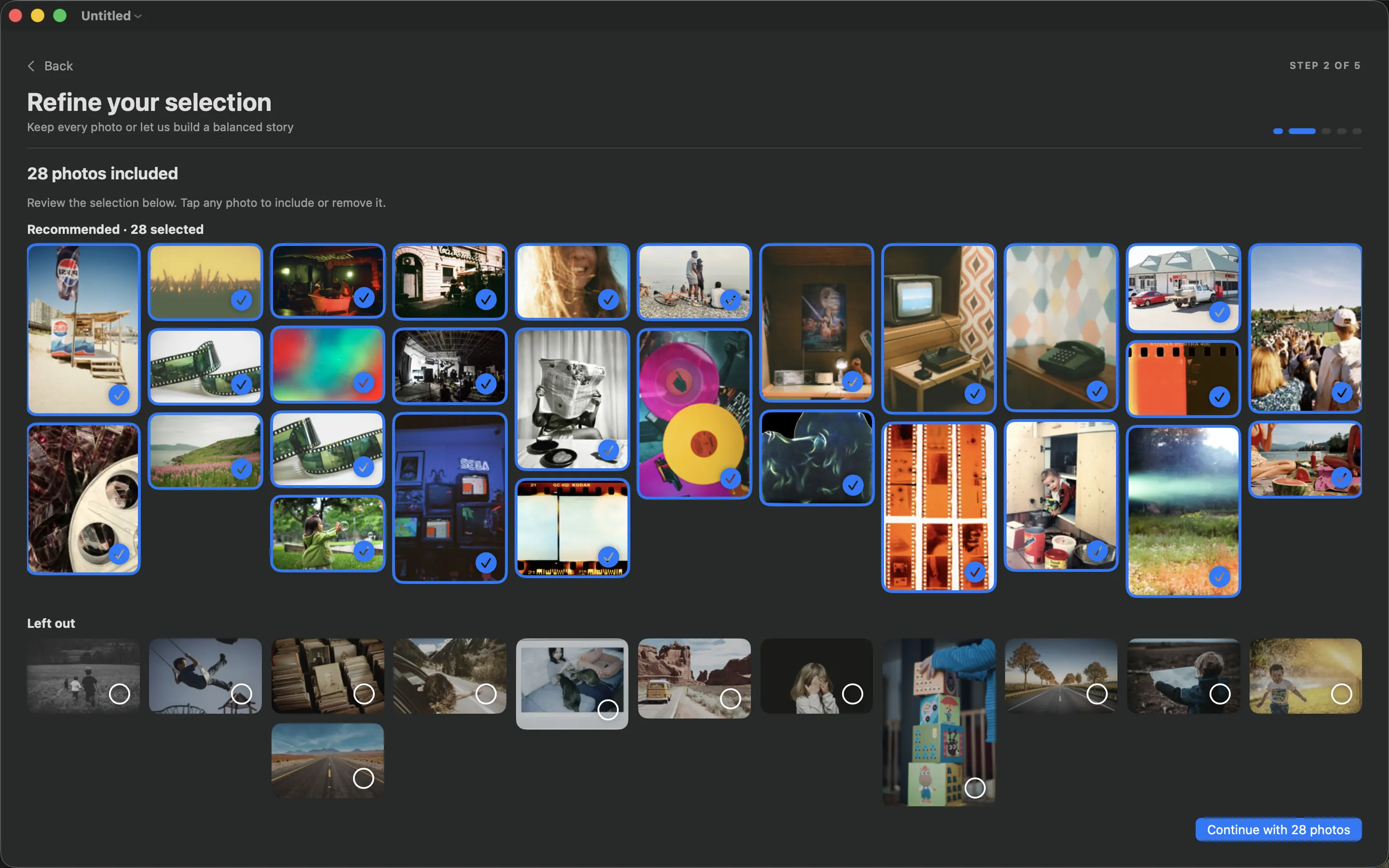
Arrange the shortlist in PhotoBooks and ask what a reader would learn about your everyday life. If the book contains only destinations and celebrations, add a few ordinary scenes. The aim is a fuller picture, not a quota of quiet moments on every spread.
Sources and product details
Keep reading
- How many photos should you put on a page?
- Chronological or themed: choosing your book’s structure
- How to handle low-resolution photos in a printed book
Make a book from your own photographs. Choose an Apple Photos album, refine the pages and export a PDF for printing or sharing.
Explore PhotoBooks →